
General dentists diagnose dental problems and can perform root canal therapy. Many root canals can be completed within a general or family dental office.
Some cases, however, have unusual anatomy, an uncertain diagnosis, previous treatment, trauma, cracks, or other factors that make focused specialist care worth considering.
A root canal specialist referral may be recommended when your dentist believes an endodontist’s additional training or experience could be helpful for a particular tooth.
If you are searching for dental offices near you in Cape Girardeau, it can help to know that comprehensive dental care does not always mean every procedure must happen in one office. Sometimes good care includes recognizing when another provider’s expertise may be useful.
We provide root canal therapy for appropriate cases and may recommend specialist evaluation when a tooth would benefit from focused endodontic care.
What Is an Endodontist?
An endodontist is a dentist who completes additional specialty education focused on diagnosing tooth pain and treating the tissues inside teeth.
According to the American Association of Endodontists, endodontists complete at least two additional years of specialty training beyond dental school.
Because their work focuses heavily on endodontic care, these specialists routinely evaluate situations involving complex canal anatomy, previously treated teeth, traumatic injuries, difficult diagnoses, and problems near the root tip.
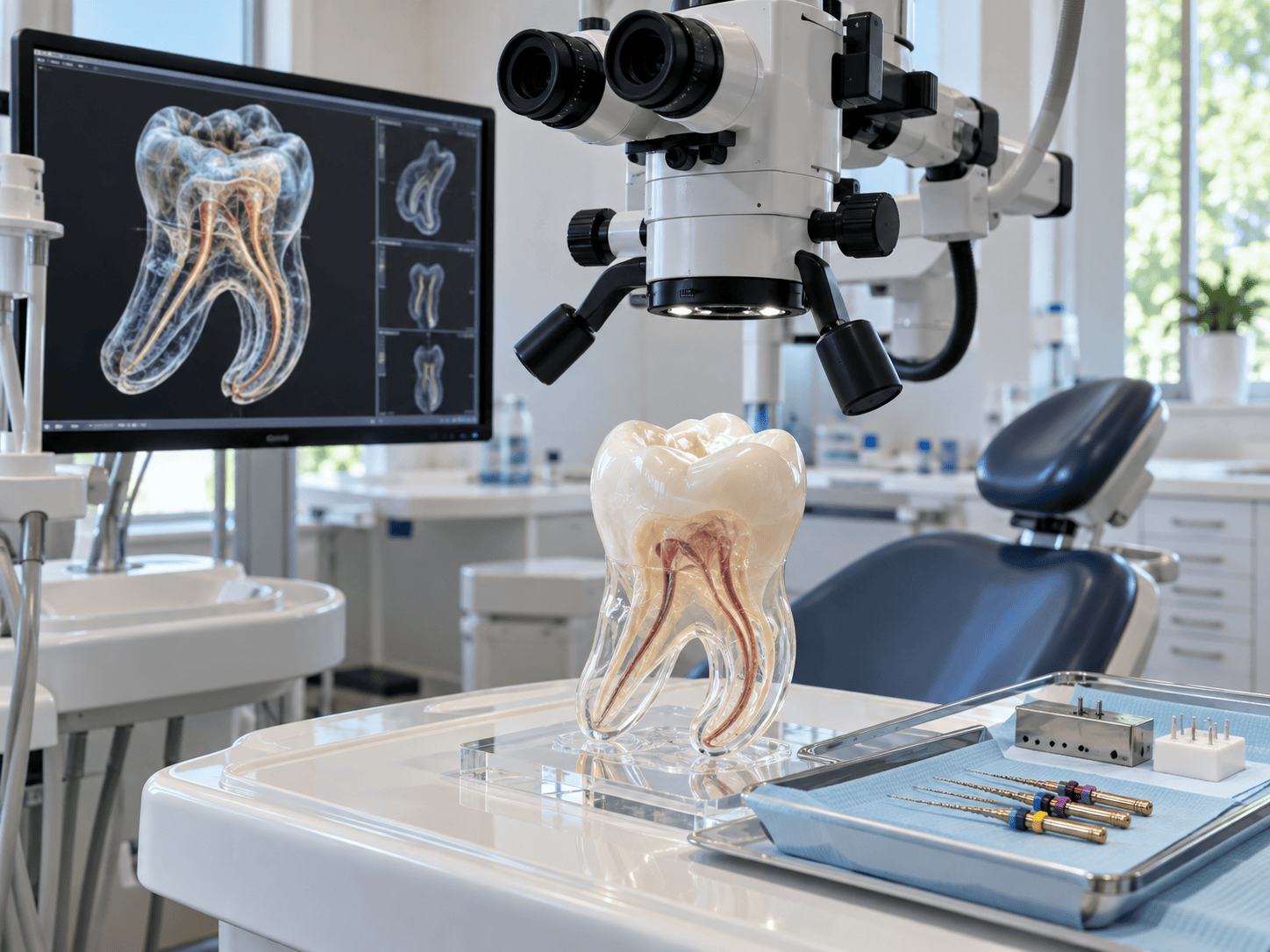
They may also use specialized magnification, imaging, and instruments for certain cases.
That does not mean every root canal needs an endodontist.
General dentists consider the individual tooth, expected difficulty, available equipment, training, experience, and patient needs when deciding whether to treat or refer.
The Diagnosis May Need Further Evaluation
Tooth pain does not always clearly identify which tooth or structure is causing the problem.
A cracked tooth, sinus-related discomfort, jaw condition, or another source of pain can sometimes produce symptoms that resemble inflammation inside a tooth.
Before recommending root canal treatment, the dentist needs reasonable confidence that the suspected tooth is actually responsible.
Evaluation may include X-rays, temperature testing, tapping or biting tests, examination for cracks, and comparison with nearby teeth.
If the findings do not match clearly or the source of the symptoms remains uncertain, an endodontic consultation may provide another level of evaluation before irreversible treatment begins.
The Tooth May Have Complex Canal Anatomy
Inside each tooth are narrow spaces called root canals.
Their number, shape, curvature, and location can vary considerably.
Some canals curve sharply, divide, join together, or become difficult to locate. Calcification can also make a canal unusually narrow.
Back teeth often contain more canals, but tooth type alone does not determine whether specialist treatment is needed.
A general dentist may be comfortable treating many molars while referring another tooth because its anatomy makes access, visibility, or treatment more difficult.
An endodontist’s focused experience with complex canal systems may make specialist care appropriate in selected cases.
A Previously Treated Tooth May Need Retreatment
A tooth can sometimes develop symptoms after previous root canal therapy.
Possible factors include new decay, a damaged restoration, a fracture, contamination, or anatomy that was difficult to identify during the original procedure.
Retreatment can be more complex because the dentist or specialist may need to work through an existing restoration and previously treated canals.
A general dentist may therefore recommend an endodontic consultation to determine whether nonsurgical retreatment, monitoring, another procedure, or a different treatment plan should be considered.
Referral does not guarantee that the tooth can be retained.
Cracks or Dental Trauma Can Complicate the Plan
Cracks and dental injuries can affect both the pulp inside the tooth and the surrounding tooth structure.
Root canal therapy treats the tissues inside the tooth, but it cannot repair every crack or make every fractured tooth restorable.
The extent and location of the damage, amount of remaining tooth structure, and ability of the tooth to support a restoration all matter.
An endodontist may be asked to evaluate the pulp or help clarify how a crack affects the tooth.
The general dentist can then determine whether a dental crown or another restorative approach may be appropriate.
Dental trauma may also require monitoring over time because a tooth’s response can change after an injury.
Endodontic Surgery May Sometimes Be Considered
Most root canal therapy is performed by accessing the inside of the tooth through the crown of the tooth.
In some situations, persistent problems near the root tip may remain after previous treatment or may not be manageable through conventional retreatment alone.
An endodontist may evaluate whether a surgical approach near the root tip is appropriate.
This type of treatment is not a standard part of every root canal. It is considered only when the diagnosis, previous care, condition of the tooth, and available alternatives support it.
A specialist referral is an evaluation, not a promise that surgery will be recommended.
Medical and Treatment Factors May Affect the Referral
The difficulty of a root canal involves more than the number or shape of the canals.
Other considerations may include:
- limited mouth opening
- tooth position
- existing crowns or restorations
- infection
- dental anxiety
- previous treatment
- medical history
- ability to access the tooth comfortably
- equipment needed for the case
Your dentist may determine that the time, equipment, or focused experience required for a particular situation is more readily available in a specialty office.
When a case is expected to be more difficult, your dentist may decide that specialist evaluation offers the most appropriate next step.
Referral in that situation is part of matching the case with an appropriate setting rather than an indication that the general dentist cannot provide root canal care.
Your General Dentist Usually Remains Part of the Care Team
Being referred to an endodontist usually does not mean leaving your regular dentist.
The two offices may coordinate several parts of care.
A typical sequence may include:
- Your general dentist evaluates the tooth and sends relevant X-rays, history, and referral information.
- The endodontist completes an evaluation and may perform additional testing.
- If treatment is recommended, the specialist explains the procedure, alternatives, and follow-up.
- Treatment information is sent back to the referring dentist.
- The general dentist evaluates the tooth for its final restoration when appropriate.
- Routine preventive and restorative care continues through the patient’s regular dental home.
Many back teeth require an appropriate final restoration after root canal therapy depending on the tooth and remaining structure.
Before treatment, ask which office will handle each stage so you know what to expect after the specialist visit.
Does a Referral Mean the Tooth Is in Very Bad Condition?
Not necessarily.
Referral often reflects complexity rather than severity.
A tooth with manageable disease may have unusual or curved anatomy that makes specialist treatment useful. Another painful tooth may have anatomy that the general dentist is comfortable treating.
The referral simply means your dentist believes focused evaluation or treatment may be appropriate for that particular case.
You can ask:
- Why is a referral being recommended?
- Is the visit for consultation, treatment, or both?
- What information will be sent to the specialist?
- What happens after the specialist visit?
- Will my general dentist provide the final restoration?
Patients can also ask whether an endodontic consultation would provide useful information when a diagnosis is uncertain or a previously treated tooth develops new symptoms.
When Should You Contact a Dentist About Possible Root Canal Symptoms?
Symptoms that may warrant dental evaluation include lingering sensitivity to hot or cold, pain when biting, spontaneous or throbbing pain, swelling, a recurring bump on the gum, or discoloration after a dental injury.
These symptoms can have more than one cause and do not automatically mean root canal therapy is necessary.
Worsening pain or swelling should be evaluated rather than ignored.
You can also review our guide to dental emergencies for additional warning signs.
Rapidly spreading swelling or difficulty breathing or swallowing requires immediate medical attention.
Coordinated Root Canal Care in Cape Girardeau
When looking for a dentist in Cape Girardeau, comprehensive care can include both treatment within the general dental office and thoughtful coordination with specialists when appropriate.
At Harter Family Dental, we provide comprehensive dental services, including root canal therapy for appropriate cases. When a tooth would benefit from focused endodontic expertise, specialist referral can become part of the overall treatment plan.
Our role does not necessarily end at the referral. The general dentist may remain involved in evaluating the tooth, coordinating records, planning the final restoration, and continuing preventive and restorative care afterward.
If you are experiencing persistent tooth pain or have questions about a recommended specialist referral, schedule a dental evaluation to discuss the findings and possible next steps.