
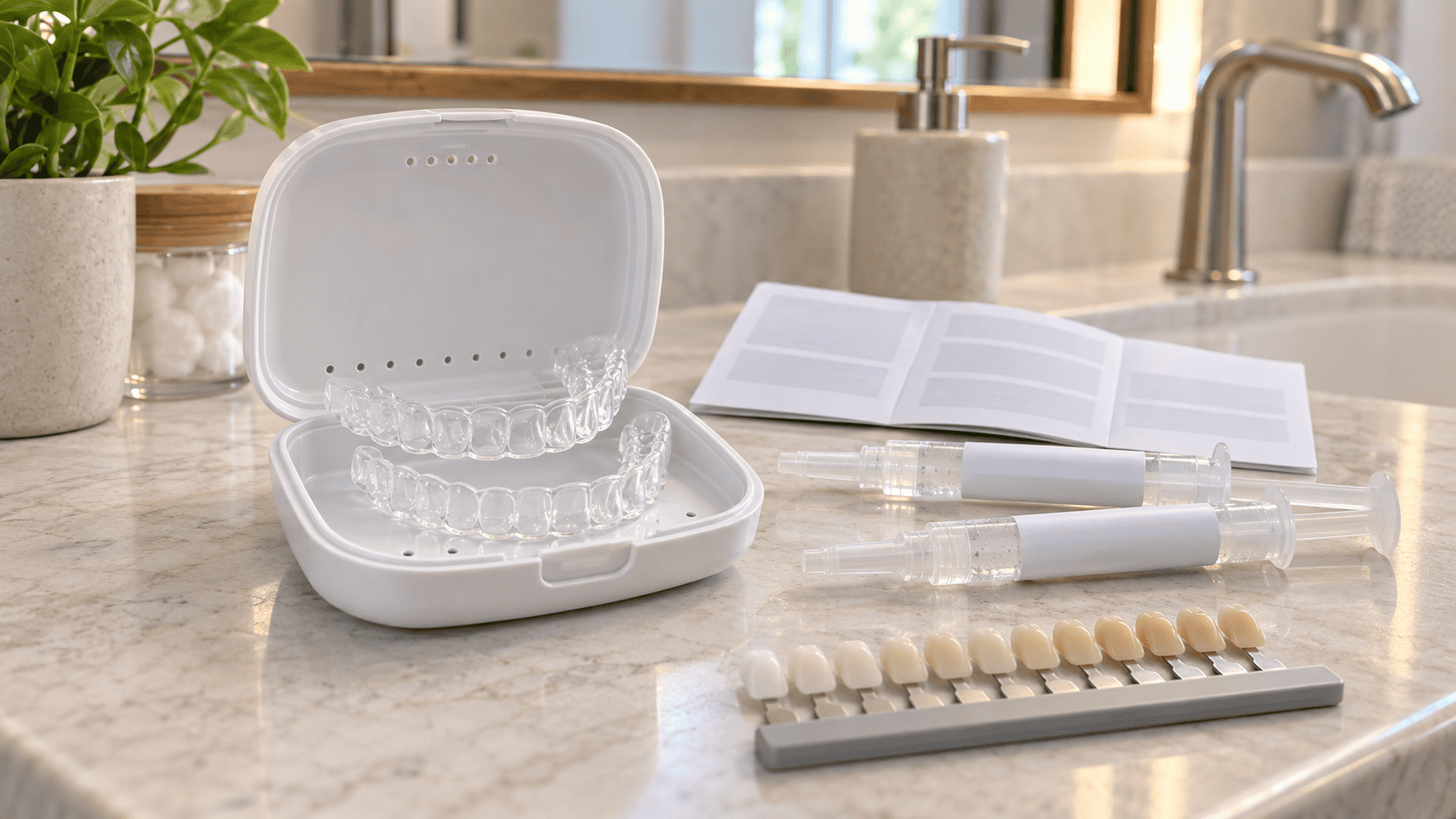
Custom take-home whitening trays let suitable patients brighten natural teeth at home with guidance from a dental team. Before starting, it helps to understand what the treatment can change, how to use the trays, and when to ask for advice.
At Harter Family Dental, we offer professional take-home whitening trays and personalized recommendations. We assess your oral health, discuss your goals, and explain the instructions for your treatment.
Whitening should begin with an appropriate plan. Your tooth condition, existing dental work, tray fit, and sensitivity history all influence that plan.
What Are Custom Take-Home Whitening Trays?
Custom trays are made to fit your teeth and hold a whitening gel against their surfaces. Bleaching ingredients in the gel act on colored compounds within natural tooth structure.
The trays and gel work together as a system. A close-fitting tray does not mean that any whitening product or wear schedule will be suitable.
Your dentist provides instructions for gel quantity, application, wear time, cleaning, and storage. These details depend on the specific product and your treatment needs.
Custom fit supports individualized care, but it does not guarantee a particular shade, eliminate side effects, or make every type of discoloration suitable for whitening.
Why Does a Dental Evaluation Come First?
A whitening consultation gives us an opportunity to understand both your smile goals and the condition of your mouth.
Tell us about sensitivity, toothaches, gum irritation, previous whitening experiences, and any visible crowns, veneers, or fillings. Bring information about products you already use so we can discuss how they fit into the plan.
Cavities, inflamed gums, exposed root surfaces, or other dental concerns may need attention before bleaching begins. Whitening does not treat these problems.
Some surface stains can be addressed with professional cleaning. If discoloration remains, we can discuss whether bleaching would offer a useful additional change.
The cause of discoloration matters, too. A single tooth that has darkened after an injury needs assessment rather than an assumption that it simply needs stronger gel.
We can explain whether whitening is reasonable, whether another concern should be addressed first, or whether a different approach may better suit your goals. An evaluation does not commit you to treatment.
What Should You Understand Before the First Application?
Before taking the trays home, make sure you know:
- Which gel to use and how much to place in the tray.
- How to insert, remove, and check the fit of the trays.
- How long and how often to wear them.
- How to remove leftover gel and clean the trays.
- What symptoms should prompt a pause and a call to the office.
Ask for a demonstration if the application process is unclear. Understanding where the gel belongs is more useful than guessing from instructions for another person’s treatment.
Use only the recommended amount. Excess gel may spread onto the gums, and extending wear time can increase sensitivity or irritation without delivering the result you expect.
Follow the product instructions and the plan provided by your dental team. If they seem inconsistent, ask for clarification before using the trays.
Does More Gel or Longer Wear Mean Better Results?
Not necessarily. Whitening products differ in their ingredients, concentrations, and intended use. A schedule suitable for one product may be inappropriate for another.
Do not add extra sessions, sleep in trays unless instructed, or combine whitening products on your own. If you miss an application, ask how to resume rather than doubling the next session.
If you have a wedding, interview, or another event approaching, mention the date during your consultation. We can discuss realistic expectations without promising a specific shade by a deadline.
How Will Whitening Affect Crowns, Fillings, or Veneers?
Whitening lightens natural teeth. It does not bleach existing crowns, tooth-colored fillings, or veneers to a new matching shade.
If your natural teeth become lighter, a visible restoration may look darker by comparison. That difference is worth discussing before treatment.
If you expect to need new dental work, tell us before starting. Whitening and shade selection may need to be coordinated, including allowing the tooth color to stabilize before a final restorative decision.
Our cosmetic dentistry consultations consider your goals alongside your existing restorations and oral health. A possible shade mismatch does not automatically mean that sound dental work should be replaced.
For example, if one upper front tooth has a crown, whitening the surrounding teeth may increase the contrast. Planning can help you decide whether to pursue a modest change, accept some difference, or discuss other options. That decision should reflect your priorities and the condition of the restoration.
What Should You Do About Sensitivity or Gum Irritation?
Temporary tooth sensitivity and gum irritation are recognized side effects of whitening. Sensitivity may be noticeable with cold air, drinks, or other triggers.
Follow any instructions already provided for managing mild sensitivity. For significant discomfort, persistent symptoms, or ongoing gum irritation, pause whitening and contact the dental team before restarting.
Let us know whether the sensation affects one tooth or several, when it began, and whether the tray feels uncomfortable. These details help guide the next step.
The recommendation might involve reviewing fit, application, product selection, or the treatment schedule. Do not change the gel strength or add other products without guidance.
A toothache or unexpected pain should not automatically be dismissed as normal whitening sensitivity. An examination may be needed to identify the cause.
Can Whitening Harm Teeth or Gums?
Misuse or excessive whitening can harm enamel or gum tissues. Professional guidance does not make treatment risk-free, and sensitivity or irritation can occur even when directions are followed.
Using the intended product correctly, addressing existing dental concerns, and reporting symptoms help manage those risks.
Avoid judging safety by whether the gel feels strong or whether you can tolerate discomfort. More sensation does not establish that whitening is working better.
What Results Can You Realistically Expect?
Results depend on your starting shade, the type of discoloration, the product, and your individual response.
Some discoloration responds more readily than other types. Changes associated with medications, trauma, or conditions inside a tooth may require a different assessment or approach.
Discuss the specific change you want rather than expecting a universal “white” shade. Natural tooth color varies, and a brighter appearance does not necessarily indicate better dental health.
If the result differs from your expectations, review it with the team before extending treatment. Increasing the number of applications is not automatically the right next step.
How Should You Care for the Trays?
Follow the cleaning and storage instructions supplied for your particular trays and gel. Ask whether the gel has specific storage conditions or an expiration date.
Avoid hot water that could distort the trays, and keep them protected from damage. Do not try to reshape a tray yourself if it becomes uncomfortable or stops seating properly.
Contact the office before reusing an old tray after new dental work or changes in tooth position. Its fit may need to be checked.
How Can You Maintain Your Results?
Brush twice daily with fluoride toothpaste and clean between your teeth each day. Keep recommended dental exams and cleanings to support oral health and manage surface buildup.
Coffee, tea, dark-colored drinks, and tobacco can contribute to staining. You do not need to treat every staining food as forbidden, but your habits can influence how your teeth look over time.
Whitening is not permanent, and there is no guaranteed duration for the result. Ask before repeating treatment instead of automatically restarting whenever your teeth look darker.
Keep track of previous treatment and any sensitivity so future recommendations can account for your experience.
Discuss Take-Home Whitening With Harter Family Dental
Understanding the instructions, limitations, and possible side effects can help you decide whether whitening fits your needs.
At Harter Family Dental in Cape Girardeau, MO, we offer custom take-home whitening trays with guidance based on your oral health and smile goals.
Schedule a Whitening Consultation to discuss your options and what to expect before beginning treatment.