
The Not So Scary Truth About Cavities
Nearly 90 percent of adults will need a filling at some point in their lives. If that statistic makes you uneasy, you are not alone. The reality is that dental fillings in Cape Girardeau today are far removed from the slow uncomfortable experiences many people remember. Modern tools advanced anesthesia and improved materials have transformed fillings into one of the most routine and comfortable procedures in dentistry.
Life in Cape Girardeau is meant to be enjoyed. Whether that means sharing a great meal at Broussard’s, grabbing coffee downtown, or spending time with family and friends, oral health plays a major role in daily comfort and confidence. A small cavity left untreated can quietly interfere with all of it.
This guide was created to help you understand your options clearly. You will learn how different filling materials compare in cost, appearance and durability so you can choose what best fits your budget lifestyle and long term dental health.
Which Dental Filling Material Is Right for Your Tooth?
Choosing a filling material is about more than color. It affects how well the tooth holds up over time, how much natural tooth structure is preserved, and how the restoration responds to everyday chewing forces. A good recommendation balances biomechanics, aesthetics, and longevity.
Amalgam or Silver Fillings
Amalgam has been used for decades because of its ability to withstand heavy biting pressure. It is especially effective for back molars where chewing forces are highest. This material is condensed into the tooth and hardens quickly, creating a dense restoration that resists wear. With proper care, amalgam fillings often last 10 to 15 years or more.
Composite or Tooth Colored Fillings
Composite resin fillings are bonded directly to the tooth using advanced adhesive systems. This chemical bond helps distribute chewing forces across the tooth rather than concentrating stress in one area. Because composite adheres to enamel and dentin, less healthy tooth structure needs to be removed. This makes composite an excellent option for front teeth and visible areas of the smile.
Ceramic or Porcelain Inlays and Onlays
Ceramic restorations are fabricated outside the mouth and then bonded to the tooth. This allows for precise shaping and a highly accurate fit. Porcelain is extremely resistant to staining and wear, often outperforming composite in long term durability. Patients who want a natural appearance with added strength often choose this option.
Gold Fillings
Gold restorations are cast to fit the tooth precisely and have exceptional longevity. Gold wears at a rate similar to natural enamel, which helps protect the opposing tooth. While less common today, gold remains one of the most biocompatible and durable materials used in restorative dentistry.
What Actually Happens During a Filling Appointment
One of the biggest reasons patients delay dental fillings in Cape Girardeau is fear of the unknown. Understanding each step of the visit removes much of that anxiety and helps you feel more in control before you ever sit in the chair.
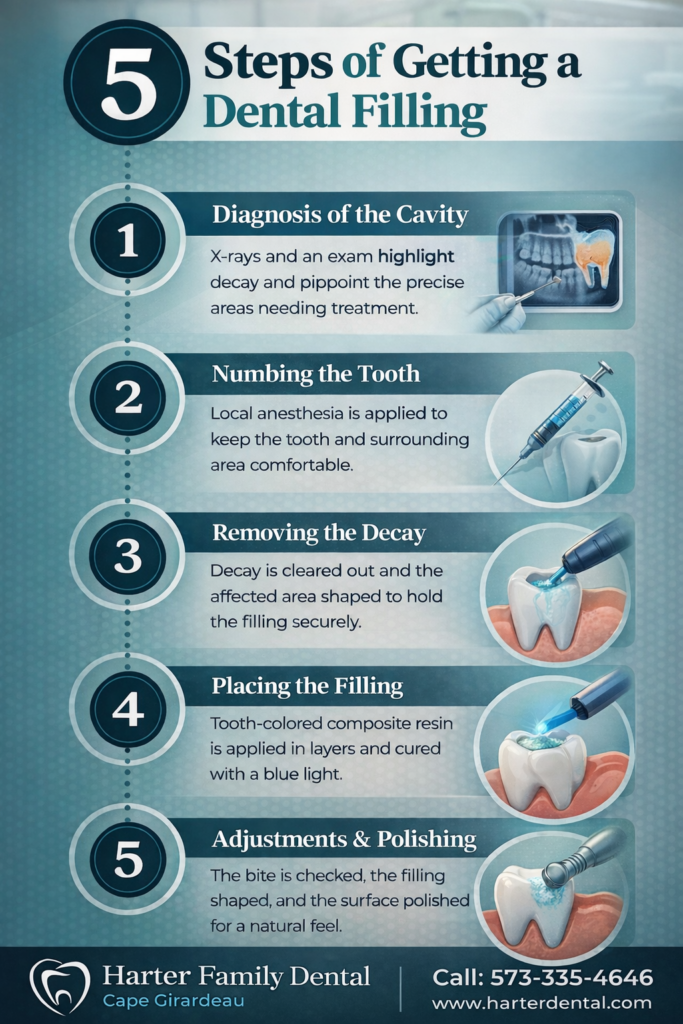
1. Numbing the Area
The appointment begins with local anesthesia to fully numb the tooth and surrounding tissue. Modern anesthetics work quickly and effectively, which means most patients feel pressure rather than pain. For patients with anxiety, many clinics also offer comfort focused options to help you stay relaxed.
2. Precision Removal of Decay
Once the tooth is numb, only the decayed portion is removed. Dentists use controlled instruments designed to preserve as much healthy enamel and dentin as possible. This conservative approach helps maintain the long term strength of the tooth.
3. Thorough Cleaning
After decay is removed, the area is cleaned and disinfected. This step is critical because it reduces bacteria left behind and helps the filling bond securely to the tooth structure.
4. Placing the Filling
The chosen filling material is placed in layers and shaped to restore the natural contours of your tooth. For composite fillings, a special curing light is used to harden the resin and create a strong bond between the filling and the tooth.
5. Bite Adjustment and Polishing
Finally, the dentist checks your bite to ensure everything feels natural when you chew. The tooth is polished so the filling feels smooth and blends seamlessly with the rest of your smile.
For patients in Cape Girardeau, modern dental offices focus heavily on comfort predictability and efficiency. Most filling appointments are completed in under an hour.
Factors Affecting Cost of Dental Fillings in Cape Girardeau
Rather than focusing on a single number, it is more helpful to understand what actually influences the cost of dental fillings in Cape Girardeau. Fillings are customized treatments, and several clinical and practical factors determine the final investment.
Key factors that impact the cost include:
- Size of the cavity: Larger areas of decay require more preparation time and more restorative material.
- Location of the tooth: Back molars are harder to access and experience higher chewing forces, which can influence material choice and technique.
- Type of filling material used: Tooth colored resin ceramic and metal restorations all have different fabrication and placement requirements.
- Number of tooth surfaces involved: A cavity affecting multiple surfaces of a tooth requires additional shaping and bonding.
- Need for advanced techniques: Deep decay may require protective liners or staged treatment to protect the nerve.
- Insurance coverage and plan limitations: Coverage can vary based on material type and tooth location.
Understanding these factors helps patients have more informed conversations with their dentist and choose a solution that fits both clinical needs and personal priorities.
Why Local Expertise Makes a Real Difference
Choosing where to get dental fillings in Cape Girardeau is about more than convenience. It is about receiving care from a team that understands local patients, local habits, and the long term outcomes that matter most.
Dentists practicing in Cape Girardeau treat a high volume of restorative cases every year. That experience builds sharp clinical judgment. Subtle details like how a filling should be shaped for a specific bite or how to manage early cracks in molars come from repetition and local pattern recognition, not guesswork.
There is also a trust advantage. Local practices depend on long standing relationships and community reputation. Treatment plans are explained clearly, options are presented honestly, and recommendations are made with long term health in mind rather than short term fixes.
Follow up care is another major benefit. If a filling needs a bite adjustment or sensitivity checked, you can be seen quickly without planning a day long trip. That accessibility improves outcomes and peace of mind.
In short, local care delivers clinical expertise accountability and continuity. Those factors directly impact how comfortable your filling feels and how long it lasts.
FAQs About Dental Fillings From Cape Girardeau Patients
These are the questions patients ask most often when discussing dental fillings in Cape Girardeau. The answers below go a level deeper so you understand not just what happens, but why it matters.
1. How soon can I eat after getting a filling?
Eating is best delayed until numbness has fully resolved. Local anesthesia blocks protective reflexes, which increases the risk of cheek or tongue injury. With composite fillings, the resin is fully cured at the appointment, but the tooth and surrounding ligament may need time to settle. Starting with softer foods reduces stress on the tooth while your bite rebalances.
2. Are tooth colored fillings strong enough for back teeth?
Composite resin is engineered to handle compressive forces through a process called adhesive bonding. The material chemically bonds to enamel and dentin, which helps distribute chewing forces across the tooth rather than concentrating pressure in one area. For very large cavities or heavy bite forces, your dentist may recommend alternative materials based on biomechanics.
3. What if I am anxious about injections or pain?
Modern anesthetics are buffered and delivered slowly to reduce tissue irritation. Dentists also test numbness before beginning treatment to ensure comfort. Anxiety is addressed through pacing, explanation, and allowing patients to remain in control throughout the procedure.
4. How long do fillings typically last?
Longevity depends on material type, bite forces, oral hygiene, and whether grinding is present. Fillings fail most often due to wear, microleakage, or recurrent decay at the margins. Regular exams allow early detection before failure becomes painful.
5. Why treat a cavity if it does not hurt?
Pain usually means decay is close to or affecting the nerve. Early cavities are confined to enamel and dentin and can be treated conservatively. Delaying treatment increases the risk of needing more extensive procedures later.
Take Care of Your Cavity Before It Becomes a Bigger Problem
A small cavity rarely stays small. Decay progresses quietly, and delaying treatment often means more tooth structure removed later or the need for more complex procedures. Addressing the problem early with a well planned filling is one of the simplest ways to protect your long term oral health.
At Harter Family Dental, patients receive comfort focused care backed by modern techniques and clear communication. Every filling is approached with precision, conservative treatment planning, and an emphasis on long term durability. The goal is not just to fix today’s cavity, but to help the tooth stay healthy for years to come.
If you are noticing sensitivity, food trapping, or have been told you have early decay, now is the ideal time to act. Getting dental fillings from a trusted dentist in Cape Girardeau is faster, more comfortable and more predictable than most patients expect.
Ready to restore your smile and protect your teeth? Visit our Cape Girardeau office on Independence Street or call 573-335-4646 to schedule your comfort-first appointment.