
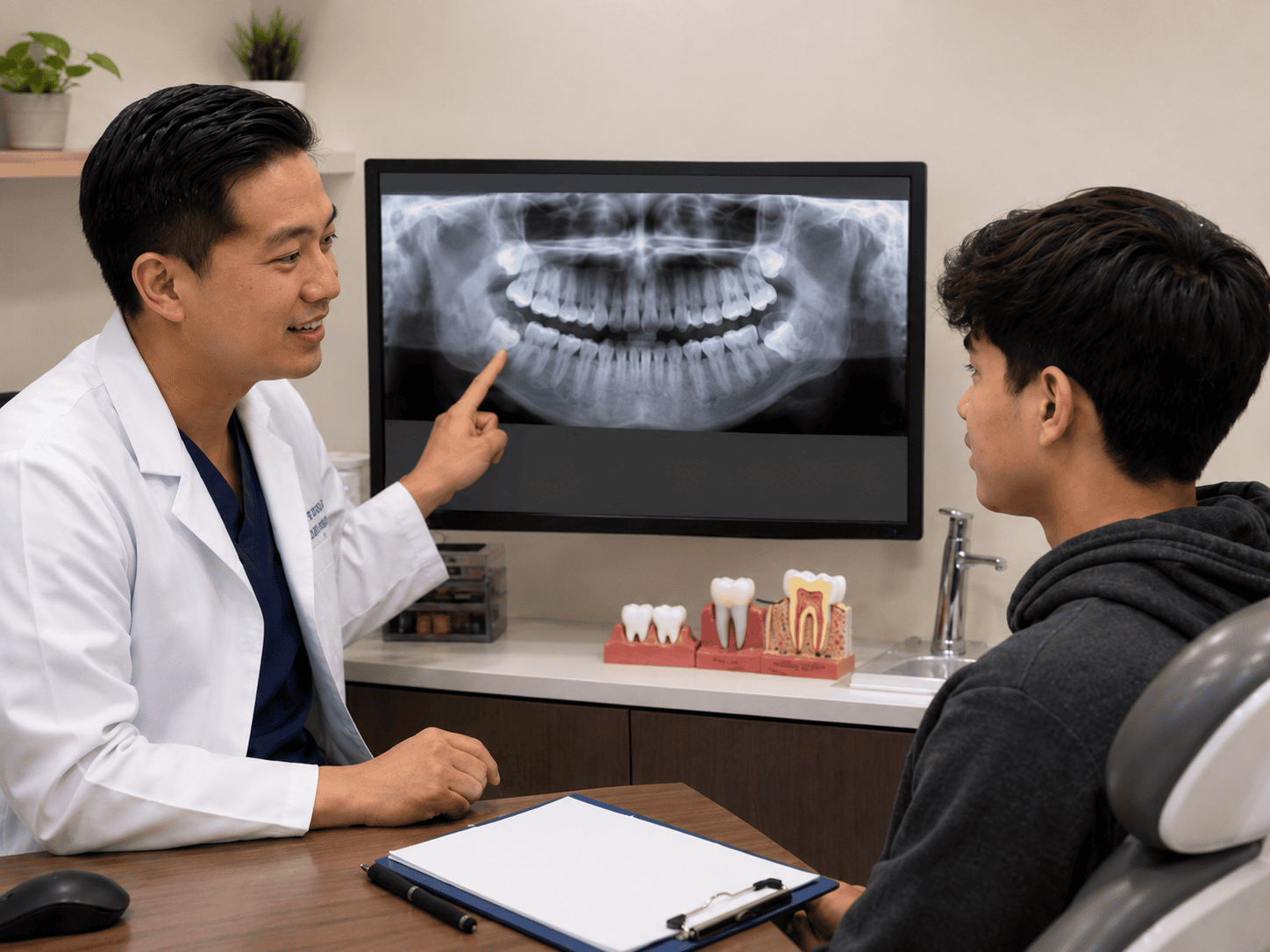
Wisdom teeth are the last set of molars to develop, typically emerging between the ages of 17 and 25. While some people have enough room for their wisdom teeth to grow normally, others may experience problems if these teeth become impacted, grow at an angle, or don’t have enough space to erupt properly.
One of the most common questions patients ask is, “Do wisdom teeth always need to be removed?” The answer is no. Wisdom tooth extractions are recommended only when they are likely to cause oral health problems or are already affecting the health of surrounding teeth and gums.
At Harter Family Dental, we believe every patient deserves individualized care. During routine dental visits, we evaluate the development and position of wisdom teeth to determine whether monitoring or extraction is the best option for your long-term oral health.
What Are Wisdom Teeth?
Wisdom teeth are the third and final set of molars located at the very back of your mouth.
Most people develop four wisdom teeth, although some people have fewer or none at all. Because they are the last permanent teeth to emerge, there often isn’t enough room in the jaw to accommodate them comfortably.
When adequate space is available and wisdom teeth erupt properly, they may not require treatment. However, when they become trapped beneath the gums or grow in an unhealthy position, they can create a variety of oral health concerns.
Do All Wisdom Teeth Need to Be Removed?
No.
Many healthy wisdom teeth can remain in place if they:
- Erupt completely
- Are positioned correctly
- Can be cleaned effectively
- Do not damage neighboring teeth
- Do not cause pain or infection
Rather than recommending extraction for every patient, your dentist evaluates several factors, including your age, symptoms, X-rays, jaw space, and overall oral health before making a recommendation.
When Is Wisdom Tooth Extraction Recommended?
Although every patient is different, wisdom tooth extractions may be recommended when the teeth are causing problems or are likely to create future complications.
Impacted Wisdom Teeth
One of the most common reasons for extraction is impaction.
An impacted wisdom tooth does not fully erupt because it becomes trapped beneath the gums or against another tooth. This can increase the risk of pain, swelling, infection, and damage to nearby teeth.
Persistent Pain or Discomfort
Ongoing discomfort in the back of the mouth may indicate that a wisdom tooth is putting pressure on surrounding tissues or neighboring teeth.
Pain isn’t always constant. Some patients notice discomfort that comes and goes, especially as wisdom teeth continue developing.
If pain persists, a dental evaluation can determine whether wisdom teeth are contributing to the problem.
Swollen or Infected Gums
Partially erupted wisdom teeth can create small openings in the gums where food particles and bacteria become trapped.
This may lead to:
- Swollen gums
- Redness
- Tenderness
- Difficulty chewing
- Repeated infections around the tooth
Treating these issues early may help prevent more serious complications.
Damage to Nearby Teeth
When wisdom teeth grow at an angle, they may push against the neighboring molars.
This pressure can increase the risk of:
- Damage to adjacent teeth
- Tooth decay in difficult-to-clean areas
- Gum disease
- Changes in tooth alignment
Routine dental evaluations help identify these concerns before significant damage occurs.
Cysts or Other Complications
In some situations, impacted wisdom teeth may contribute to the formation of cysts or other problems affecting the surrounding bone and tissues.
Although these complications are less common, they are another reason your dentist may recommend removing a wisdom tooth before more extensive treatment becomes necessary.
Why Are Routine Dental Exams So Important?
Many wisdom tooth problems begin before symptoms appear.
Regular dental exams allow your dentist to monitor the position and development of wisdom teeth using clinical evaluations and dental X-rays.
By identifying potential concerns early, it’s often possible to make informed treatment decisions before pain or infection develops.
Even if your wisdom teeth aren’t causing problems today, periodic monitoring helps protect your long-term oral health.
Are Wisdom Teeth Evaluated During Teen Years?
Yes.
Many patients begin having their wisdom teeth monitored during their mid-to-late teenage years because this is when the teeth begin developing beneath the gums.
Early evaluation allows your dentist to monitor jaw growth, determine whether enough space is available, and identify any developing concerns before symptoms occur.
However, wisdom teeth can also be evaluated in adults if they begin causing discomfort later in life.
What Happens If My Wisdom Teeth Don’t Need to Be Removed?
If your wisdom teeth are healthy, fully erupted, and functioning properly, your dentist may simply recommend continued observation.
Regular dental visits allow the teeth to be monitored over time so that any future changes can be identified early.
This individualized approach helps ensure treatment recommendations are based on your unique oral health not on a one-size-fits-all philosophy.
Personalized Wisdom Tooth Evaluations at Harter Family Dental
Not every wisdom tooth requires extraction, but regular evaluations are essential for identifying potential concerns before they become more serious. At Harter Family Dental, we carefully evaluate your wisdom teeth as part of your comprehensive dental care and recommend treatment only when it supports your long-term oral health.
If you have questions about your wisdom teeth or have started experiencing pain, swelling, or discomfort, contact Harter Family Dental to schedule an appointment. Our friendly team is here to help you make informed decisions and keep your smile healthy for years to come.
Frequently Asked Questions
Do all wisdom teeth need to be removed?
No. Wisdom teeth only need to be removed if they are causing problems or are likely to affect your oral health. If they erupt properly, are healthy, and can be cleaned effectively, your dentist may simply recommend monitoring them during routine dental visits.
What are the signs that a wisdom tooth may need to be extracted?
Common signs include pain in the back of the mouth, swollen or tender gums, repeated infections around a partially erupted tooth, difficulty opening your mouth, or damage to neighboring teeth. A dental exam and X-rays can help determine whether extraction is recommended.
At what age should wisdom teeth be evaluated?
Wisdom teeth are often evaluated during the mid-to-late teenage years, before they fully erupt. Early monitoring allows your dentist to identify potential concerns and determine whether there is enough room for the teeth to develop properly.
Can wisdom teeth cause problems even if they don’t hurt?
Yes. Some impacted or poorly positioned wisdom teeth may not cause noticeable symptoms at first but can still contribute to tooth decay, gum disease, damage to nearby teeth, or other oral health concerns. Regular dental exams help detect these issues early.
How do I know if my wisdom teeth should be monitored or removed?
The best way to know is through a professional evaluation. Your dentist will consider factors such as the position of your wisdom teeth, available space in your jaw, your oral health, symptoms, and X-rays before recommending continued observation or extraction.